
Written by  Maria Torres · Updated 2026-11-25
- Category
- Landmarks & Cultural Venues
- Area
- Santiago Centro
Chile's main stadium opened in Ñuñoa on December 3, 1938, planned by Austrian urbanist Karl Brunner and designed by architects Aníbal Fuentealba, Alberto Cormatches and Ricardo Muller. It hosted the final of the 1962 World Cup, and today seats 46,190. After the 1973 coup it was used as a detention and torture center between September 12 and November 9; on a single day about 7,000 prisoners were counted. Since 2010 a memorial has preserved Escotilla 8 and a section of original bleachers in the north stand bearing the words 'Un pueblo sin memoria es un pueblo sin futuro.' The Corporación Estadio Nacional Memoria Nacional leads guided visits; confirm current arrangements before you go.
What the National Stadium is
The Estadio Nacional Julio Martínez Prádanos is Chile's main sports venue, set within the Parque Deportivo Estadio Nacional, a sports complex of about 64 hectares in Ñuñoa. Its official maximum capacity is 46,190 seated spectators. Chile's national football team has played its home matches here since 1939.
It is also one of the country's most important memory sites. In the weeks after the coup of September 11, 1973, the stadium was the largest detention and torture center in Chile, and today several parts of it are preserved and explained by an organization of former political prisoners. The stadium was declared a historic monument in 2003.
History: 1938 to the 1962 World Cup
Under President Arturo Alessandri, the stadium was planned by the Austrian architect and urbanist Karl Brunner as part of the first metropolitan plan for Santiago, and designed by architects Aníbal Fuentealba, Alberto Cormatches and Ricardo Muller. Built in 1937 and 1938 on the former Lo Valdivieso estate, it opened on December 3, 1938, with free entry, a gymnastics display and a parade of sports federations. The first football match was played the next day: Colo-Colo beat Brazil's São Cristóvão 6–3.
For the 1962 World Cup, the cycling track around the pitch was replaced by stands. The stadium hosted Group B (Chile, West Germany, Italy and Switzerland), a quarterfinal, the semifinal in which Brazil beat Chile 4–2, the third-place match won by Chile against Yugoslavia with a last-minute goal by Eladio Rojas, and the final, in which Brazil won its second world title. It also hosted the finals of the 1987 Under-20 World Cup, has seen more Copa América matches than any other stadium (74), and opened the 2023 Pan American Games on October 20, 2023.
1973: detention and torture center
After the coup, the stadium was used as a detention and torture center for opponents of the military dictatorship from September 12 to November 9, 1973. On a single day the Red Cross counted about 7,000 prisoners, around 300 of them foreigners. Prisoners were held without charges; survivors have described torture and mock executions, and some people were shot inside the grounds. Among those killed was the American Charles Horman, whose story was told in the book The Execution of Charles Horman and the film Missing.
The stadium's eight escotillas, the passages under the stands, each held between 300 and 400 men, and its 28 dressing rooms at least 100 each. From September 22 prisoners were taken up to the stands during the day, which became a place of waiting before being called to interrogation. Detainees were marched, heads covered with blankets, about 200 meters to the velodrome, where interrogation and torture took place in the tunnel and in two stone buildings known as the caracoles. Women were held first in the dressing rooms of the main stadium and from September 26 in the swimming pool changing rooms; the regime itself later admitted to 509 women detainees, while testimonies of former prisoners put the number at about 1,200.
The memory sites you can visit
In 2010 a set of memorials was inaugurated: Escotilla 8 was reopened, and a section of the north stand kept its original wooden benches, closed to spectators, beneath the words "Un pueblo sin memoria es un pueblo sin futuro" (a people without memory is a people without a future). After a restoration led by the former prisoners' corporation, Escotilla 8 reopened to the public on December 19, 2018, with the messages, names and calendars that prisoners scratched into its walls and a photographic exhibition of former detainees.
On Avenida Grecia, the Memorial Grecia by the artist and former political prisoner Guillermo Núñez, inaugurated in March 2014, honors political prisoners from across Chile, with water falling over a wall, the Andes carved in relief as the only landscape prisoners could see, and the words "Yo estuve aquí" (I was here). At the eastern access, the Mural 50 años was painted by Alejandro "Mono" González and the singer Mon Laferte with former prisoners and relatives for the 50th anniversary of the coup.
The Corporación Estadio Nacional Memoria Nacional Ex Prisioneros Políticos, a nonprofit of former political prisoners, was formed on August 27, 2013, after asking the National Monuments Council to give special protection to seven places inside the stadium. It looks after the sites and leads the visits.
Visiting: guided memory tours and the park
When this page was checked (November 2026), the corporation's website offered a guided Recorrido de la Memoria for the general public every Saturday at 10:00, booked through the form on memoriaestadionacional.cl; dates for schools and institutions were full for 2026. Check the site before you go. The route can include Escotilla 8, the stands, the corridor of dressing rooms, the women's changing rooms, the Camino de la Memoria to the velodrome and the Memorial Grecia. The content is explicit about torture, so consider it carefully before bringing children.
When checked in November 2026, the official park site listed the Parque Estadio Nacional around the stadium as open Monday to Sunday from 08:00 to 21:00; only common areas are open to walk freely, and areas used by spectators are closed on days of major events. The Instituto Nacional de Deportes, which runs the park, also takes requests for guided visits of the complex through its website. Football matches and concerts are ticketed separately.
Getting there
Estadio Nacional station on Metro de Santiago Line 6, opened in 2017, is at the northeast corner of the stadium, at Avenida Pedro de Valdivia and Avenida Grecia; it was built extra large to handle event crowds. The Memorial Grecia and the stadium's Avenida Grecia side are a short walk from the exit.
The memory sites are spread across the complex, from the main stadium to the velodrome about 200 meters away, so wear comfortable shoes. The stadium sits in the residential district of Ñuñoa, so a visit combines easily with the rest of that neighborhood.
Memory sites inside the National Stadium
The places preserved by the former prisoners' corporation.
Escotilla 8
Where Under the stands
Collective cell with prisoners' inscriptions; restored and reopened in 2018
Graderías
Where North stand
Original wooden benches kept since 2010 with the phrase on memory
Pasillo y camarines
Where Corridors around the stadium
Dressing rooms where most men were held
Camarín de mujeres
Where Swimming pool area
Changing rooms where women were held from September 26, 1973
Camino de la Memoria and velodrome
Where About 200 m from the stadium
Route to the interrogation and torture areas
Memorial Grecia
Where Avenida Grecia side
Guillermo Núñez's 2014 monument to political prisoners
Mural 50 años
Where Eastern access
Mural by Mono González and Mon Laferte for the 50th anniversary of the coup
Access to most sites is by guided visit only; book through the corporation's website.
Frequently asked questions
Can you visit the Estadio Nacional memory sites?
Yes. In November 2026 the Corporación Estadio Nacional Memoria Nacional ran guided visits for the general public every Saturday at 10:00, booked online at memoriaestadionacional.cl.
What happened at the Estadio Nacional in 1973?
From September 12 to November 9, 1973, the military regime used the stadium as a detention and torture center; on a single day the Red Cross counted about 7,000 prisoners.
How do I get to the National Stadium in Santiago?
Take Metro Line 6 to Estadio Nacional station, at Avenida Pedro de Valdivia and Avenida Grecia, on the northeast corner of the stadium.
What is the capacity of the Estadio Nacional?
Its official maximum capacity is 46,190 seated spectators.
Did the Estadio Nacional host the 1962 World Cup final?
Yes. Brazil won the final here to take its second world title, and Chile beat Yugoslavia in the third-place match.
Is the park around the stadium open to the public?
Yes. In November 2026 the Parque Estadio Nacional was open Monday to Sunday from 08:00 to 21:00, with sports venues and event areas restricted.
Popular tours that include National Stadium (Estadio Nacional)
-
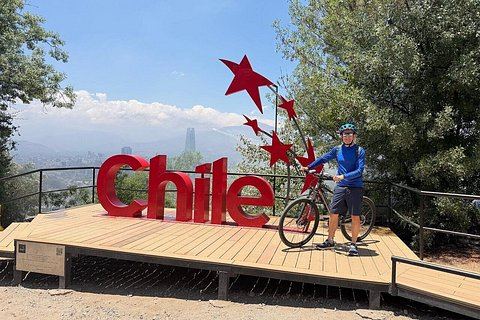 Tour of Santiago by bicycle
Free cancellationPrivate
(opens in a new tab)
-
 Private Helicopter Tour above Santiago with hotel transport
Free cancellationPrivate
(opens in a new tab)
-
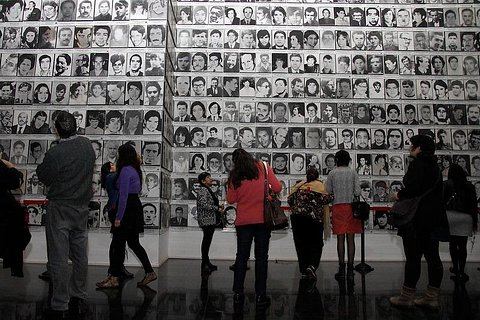 Memory Tour in Santiago de Chile
Free cancellationPrivate
(opens in a new tab)
Affiliate link Viator · If you book through this link, we may earn a commission at no extra cost to you.