9 places · Santiago
The Best Landmarks and Cultural Venues in Santiago
Santiago's 19th- and early 20th-century landmarks include the Municipal Theater, opened in 1857, the Cousiño Palace and two great railway stations built with French steel. Several now work as cultural venues: the old Mapocho terminal hosts the Santiago International Book Fair, and the warehouses of Matucana 100 stage theater and dance. The General Cemetery and the National Stadium also keep memorials to the victims of the 1973–1990 dictatorship, best visited with time and a quiet approach.
Compare at a glance
| Place | Area |
|---|---|
| Cousiño Palace (Palacio Cousiño) | Santiago Centro |
| Municipal Theater of Santiago (Teatro Municipal) | Santiago Centro |
| National Library of Chile (Biblioteca Nacional) | Santiago Centro |
| Mapocho Station Cultural Center (Centro Cultural Estación Mapocho) | Santiago Centro |
| Central Station (Estación Central) | Santiago Centro |
| General Cemetery (Cementerio General) | Santiago Centro |
| Sacramentinos Church (Iglesia de los Sacramentinos) | Santiago Centro |
| National Stadium (Estadio Nacional) | Santiago Centro |
| Matucana 100 (Centro Cultural Matucana 100) | Barrio Yungay & Brasil |
-
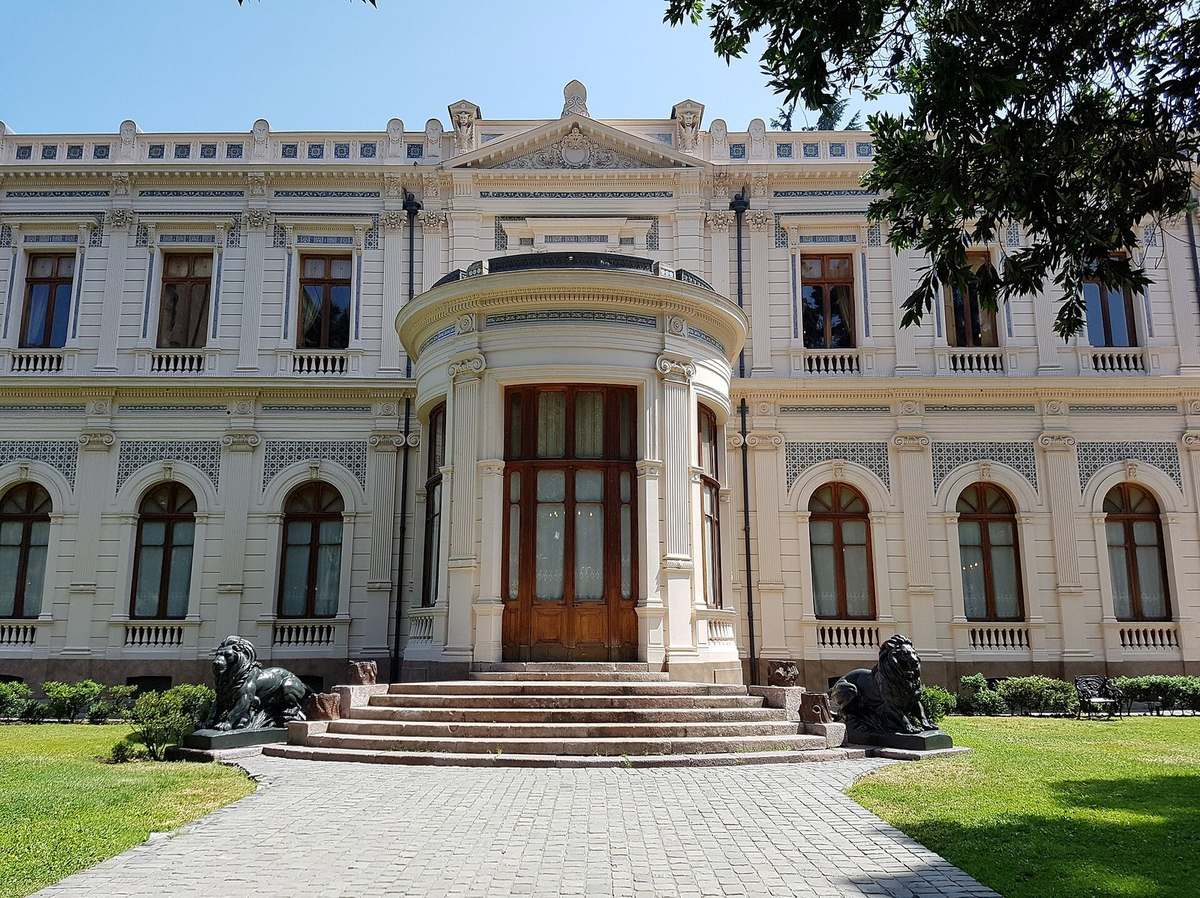
The garden front of Cousiño Palace on Calle Dieciocho Photo: Rodrigo Fernández, Wikimedia Commons (CC BY-SA 4.0) 1 Cousiño Palace (Palacio Cousiño)
Santiago Centro
Begun in 1870 for Luis Cousiño and Isidora Goyenechea, whose family owned the Lota coal mine and the Chañarcillo silver mine, this mansion at Calle Dieciocho 438 was designed by French architect Paul Lathoud and finished in 1878. Read the full guide to Cousiño Palace (Palacio Cousiño) →
-
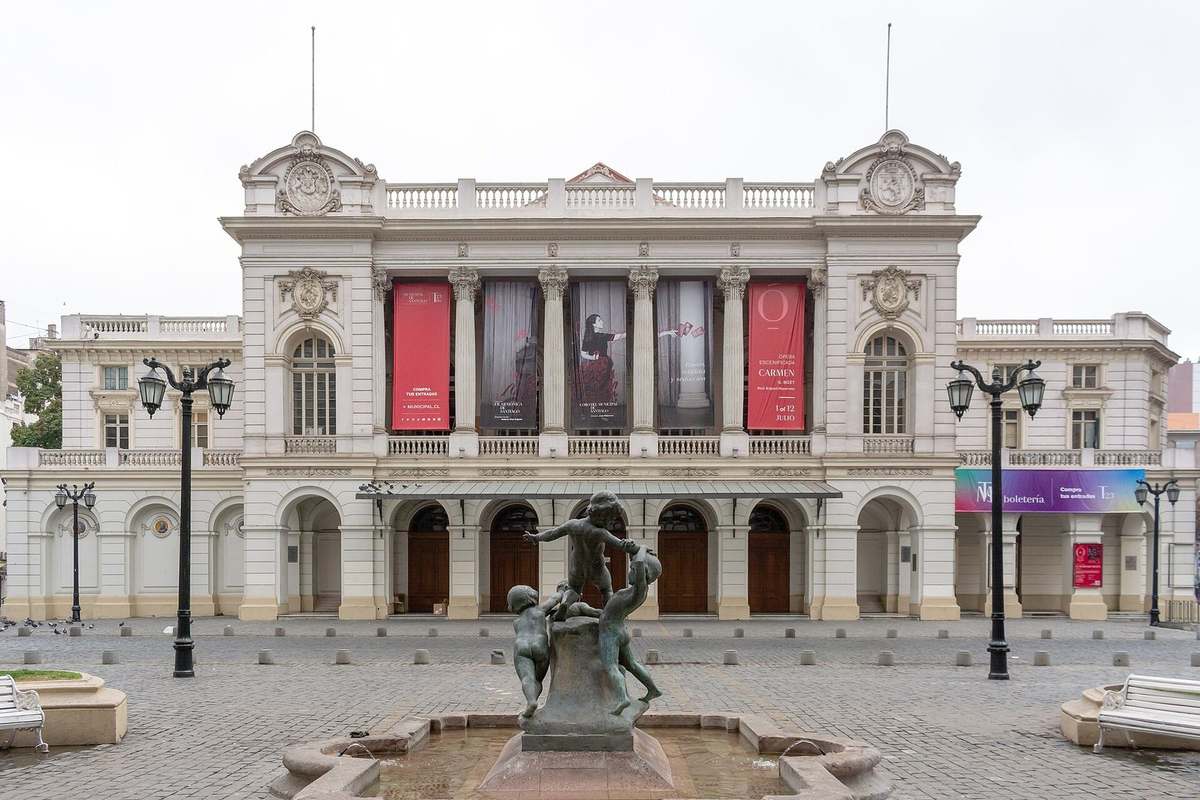
The facade of the Municipal Theater of Santiago Photo: Carlos Figueroa Rojas, Wikimedia Commons (CC BY-SA 4.0) 2 Municipal Theater of Santiago (Teatro Municipal)
Santiago Centro
Ordered by President Manuel Montt on January 7, 1853, the theater opened on September 17, 1857, with Verdi's Ernani, on the site of the colonial Royal University of San Felipe. Read the full guide to Municipal Theater of Santiago (Teatro Municipal) →
-
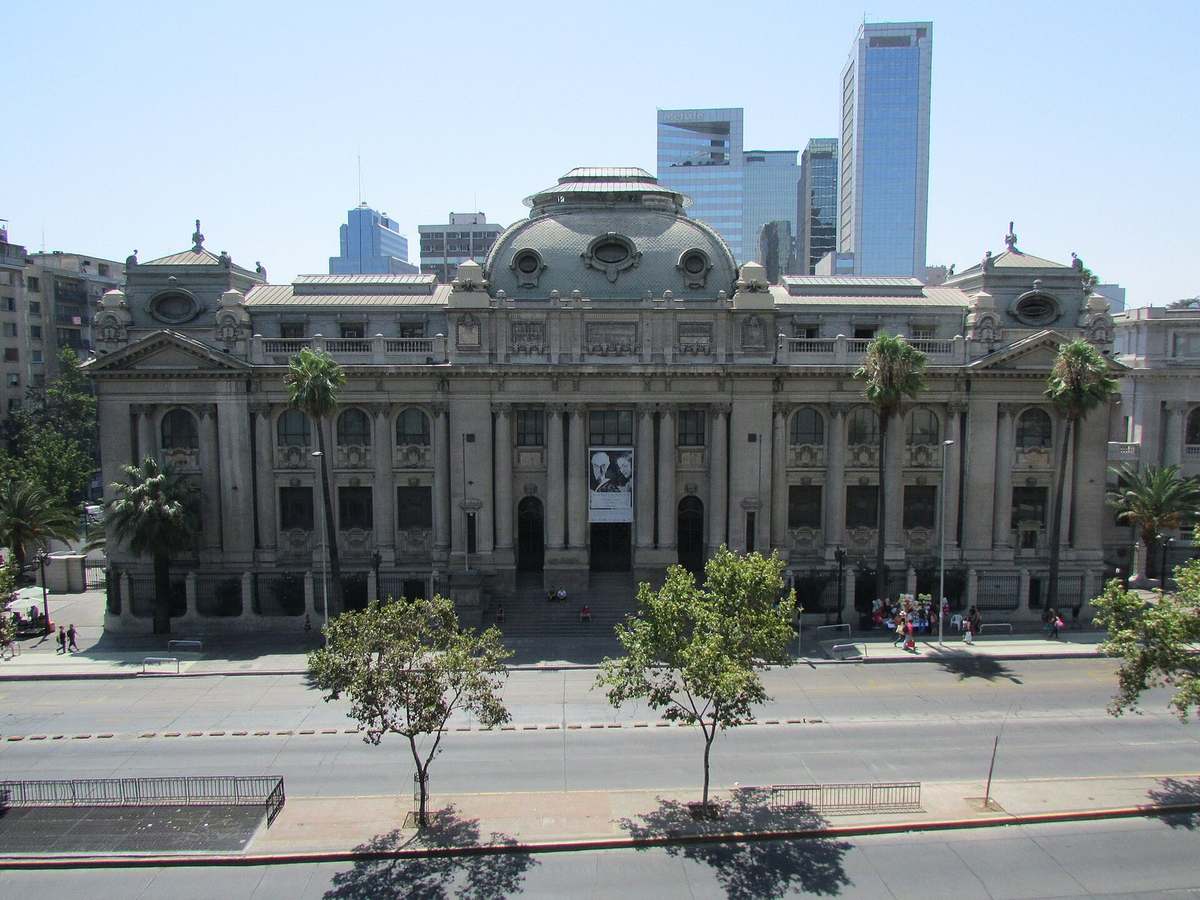
The National Library on the Alameda Photo: 3BRBS, Wikimedia Commons (CC BY-SA 4.0) 3 National Library of Chile (Biblioteca Nacional)
Santiago Centro
Founded on August 19, 1813, the National Library moved through several buildings before settling on the Alameda, opposite Santa Lucía Hill. Read the full guide to National Library of Chile (Biblioteca Nacional) →
-
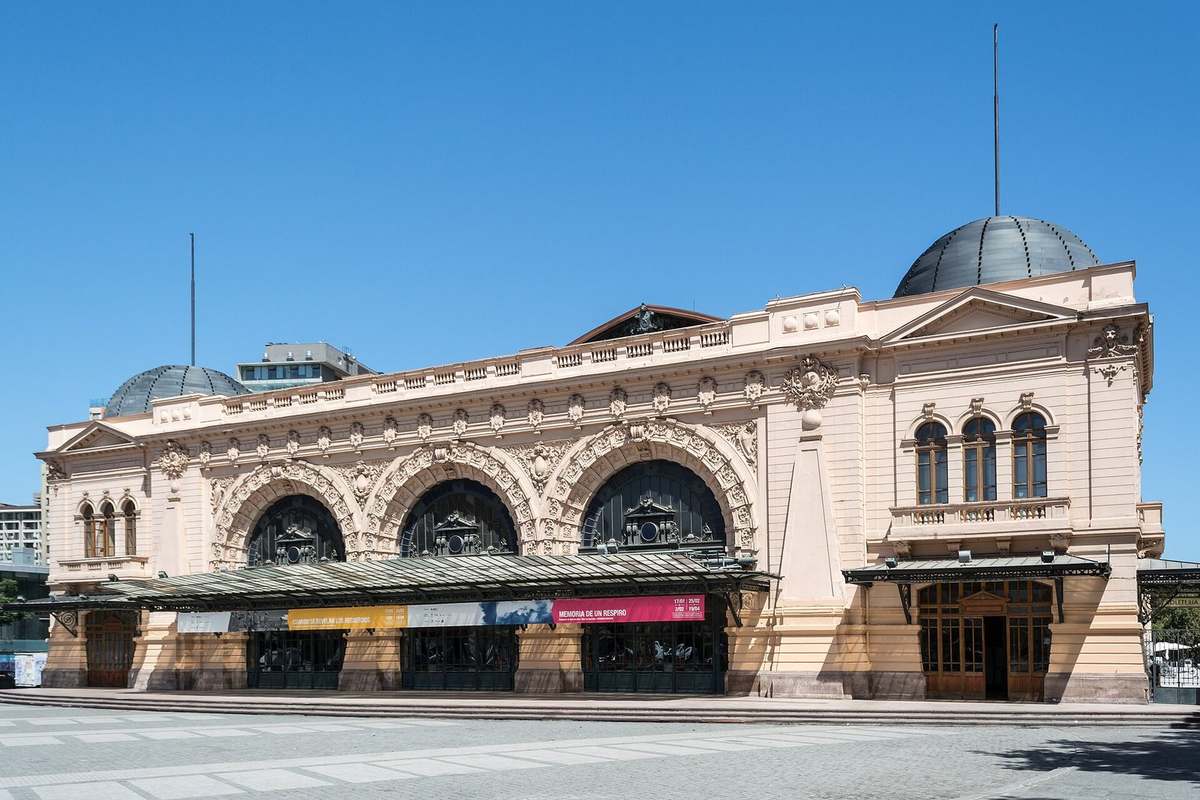
The facade of the former Mapocho railway station Photo: Carlos Figueroa, Wikimedia Commons (CC BY-SA 4.0) 4 Mapocho Station Cultural Center (Centro Cultural Estación Mapocho)
Santiago Centro
Trains to Valparaíso and the north once ended at this Beaux-Arts terminal by the Mapocho River, designed by Chilean architect Emilio Jéquier and opened on May 10, 1912. Read the full guide to Mapocho Station Cultural Center (Centro Cultural Estación Mapocho) →
-
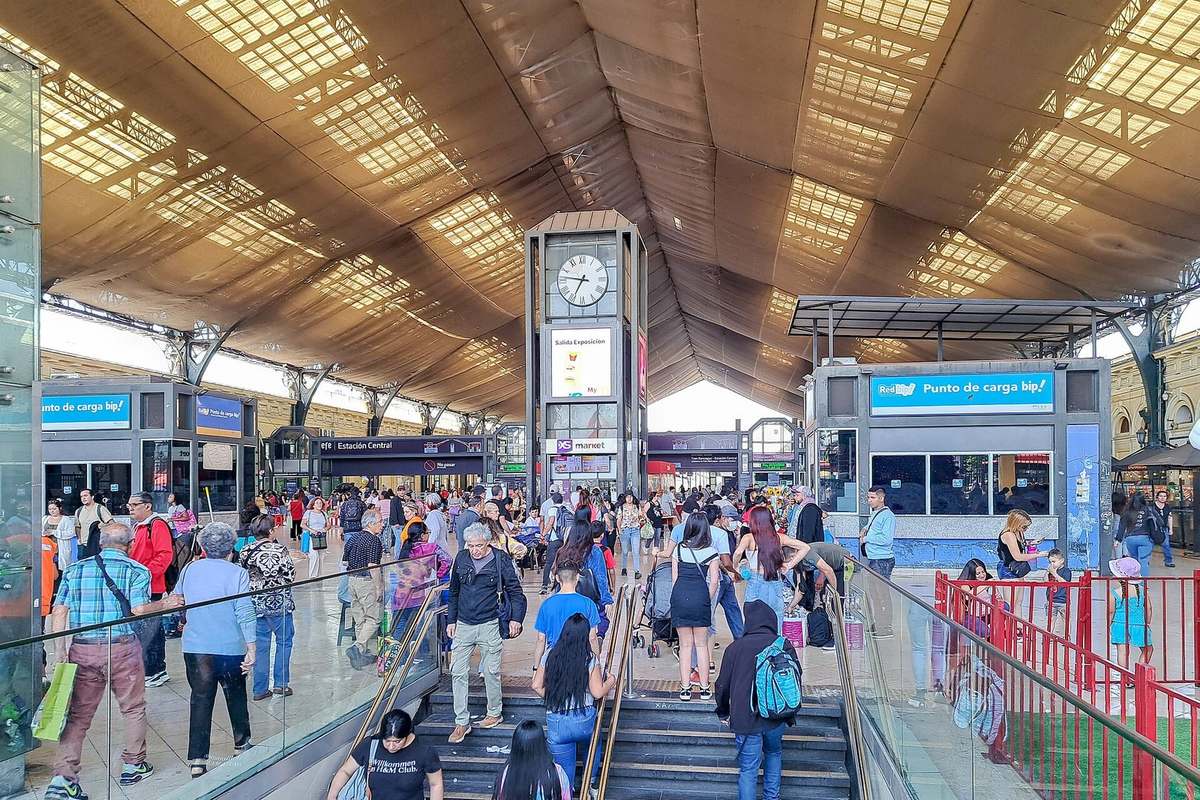
The steel train shed of Central Station on the Alameda Photo: Carlos yo, Wikimedia Commons (CC BY-SA 4.0) 5 Central Station (Estación Central)
Santiago Centro — Estación Central
Chile's main railway terminal opened on the Alameda in 1857, and its present train shed dates from 1900. Read the full guide to Central Station (Estación Central) →
-
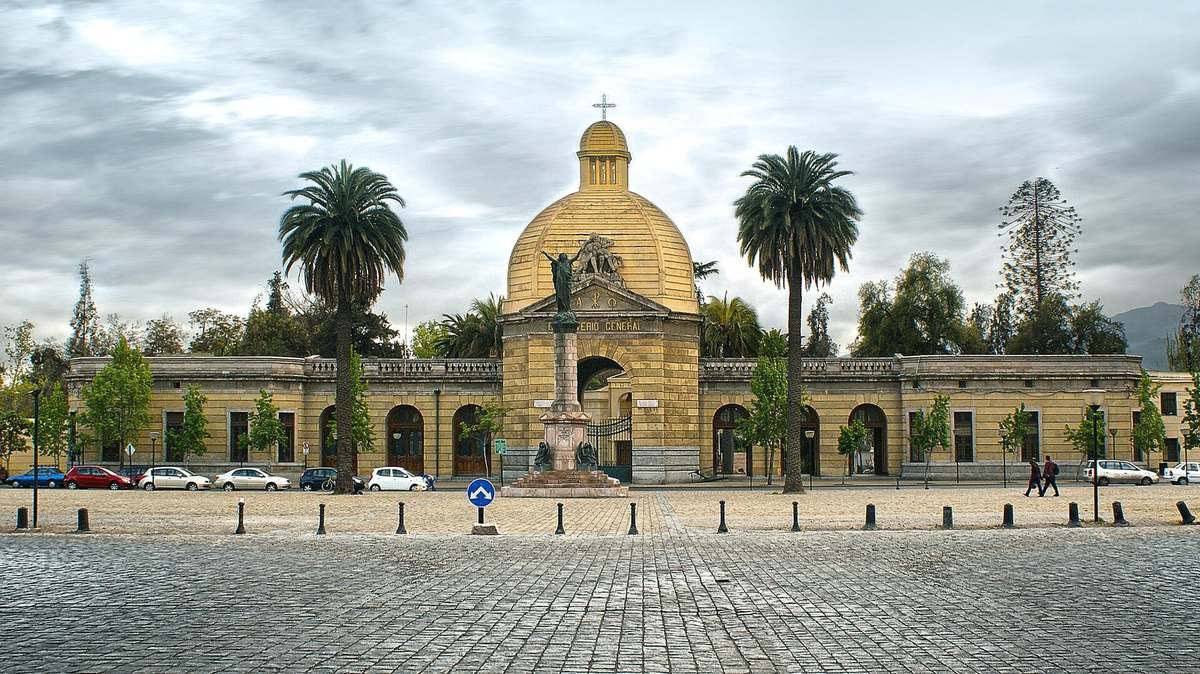
The main entrance of the General Cemetery in Recoleta Photo: Pepoideas, Wikimedia Commons (CC BY-SA 3.0) 6 General Cemetery (Cementerio General)
Santiago Centro — Recoleta
Bernardo O'Higgins inaugurated the cemetery on December 9, 1821, and it now covers 86 hectares in Recoleta, with close to two million people buried. Read the full guide to General Cemetery (Cementerio General) →
-
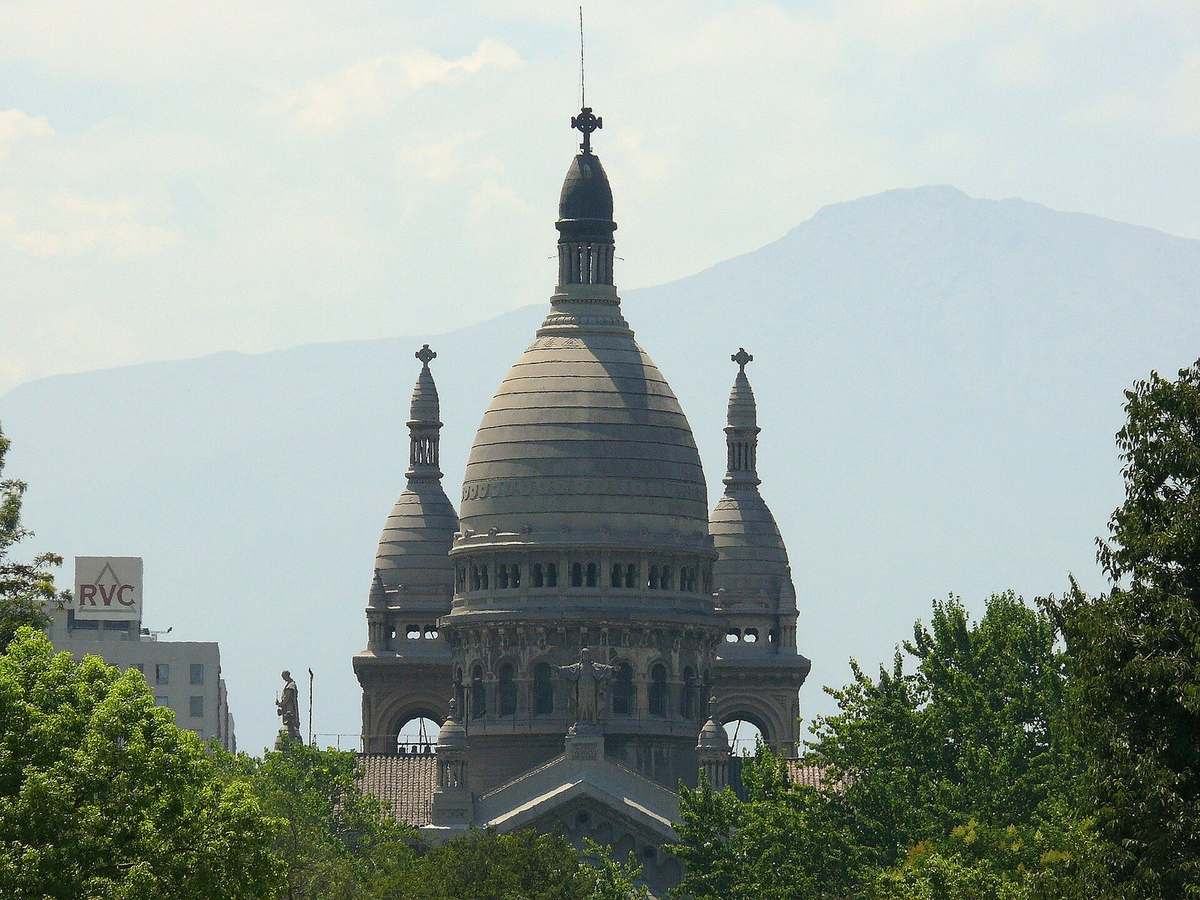
The domes of the Sacramentinos church seen from Parque Almagro Photo: Marcelo Ois Lagarde, Wikimedia Commons (CC BY-SA 3.0) 7 Sacramentinos Church (Iglesia de los Sacramentinos)
Santiago Centro
Modeled on the Sacré-Cœur basilica in Paris, this church at the corner of Arturo Prat and Santa Isabel faces Parque Almagro. Read the full guide to Sacramentinos Church (Iglesia de los Sacramentinos) →
-
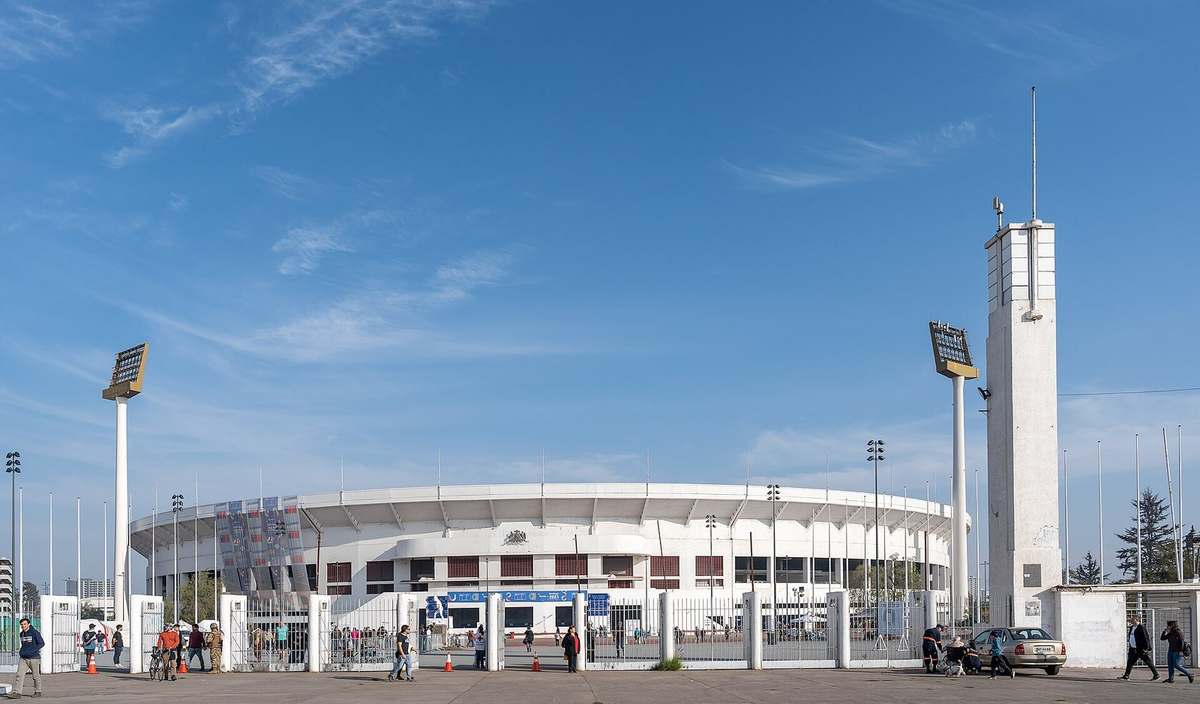
The National Stadium and its entrance tower in Ñuñoa Photo: Rjcastillo, Wikimedia Commons (CC BY-SA 4.0) 8 National Stadium (Estadio Nacional)
Ñuñoa
Chile's main stadium opened in Ñuñoa on December 3, 1938, planned by Austrian urbanist Karl Brunner and designed by architects Aníbal Fuentealba, Alberto Cormatches and Ricardo Muller. Read the full guide to National Stadium (Estadio Nacional) →
-
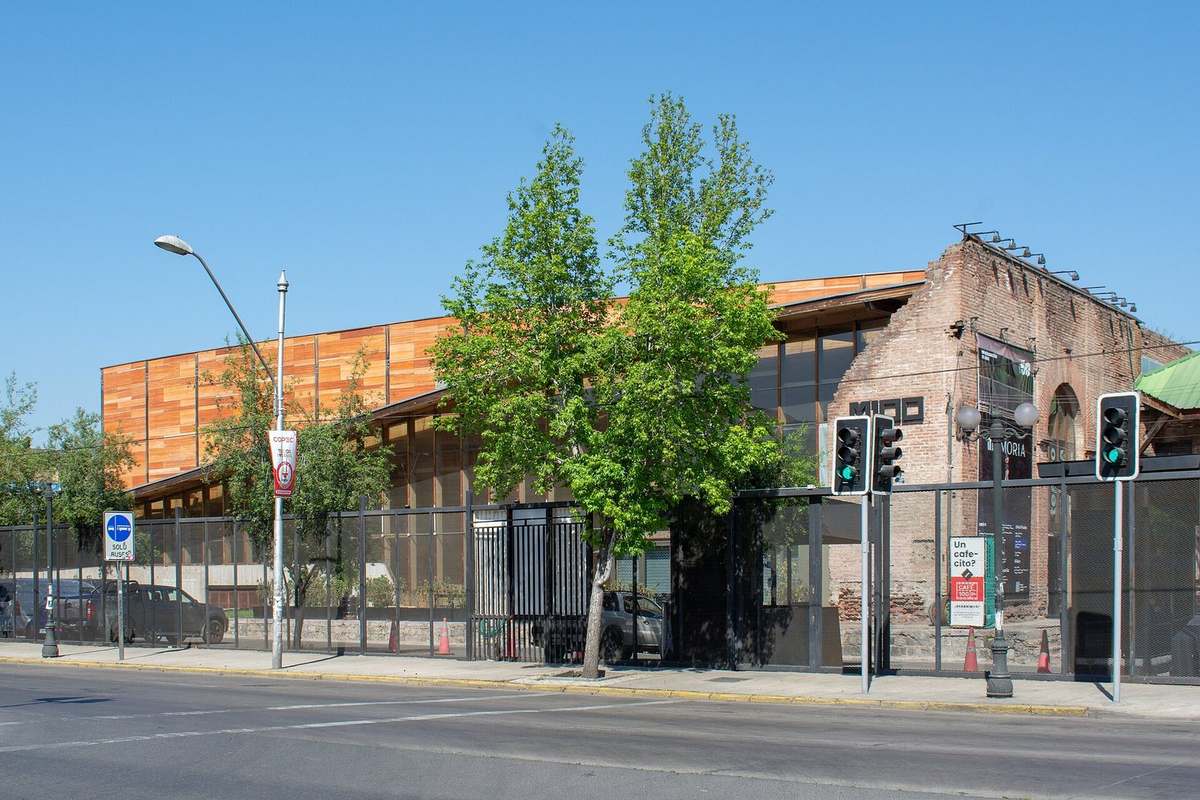
The Matucana 100 cultural center on Avenida Matucana Photo: Carlos Figueroa Rojas, Wikimedia Commons (CC BY-SA 4.0) 9 Matucana 100 (Centro Cultural Matucana 100)
Barrio Yungay & Brasil — Estación Central
These brick warehouses on Avenida Matucana date from around 1907 and once stored supplies for the state, halfway between Mapocho and Central stations. Read the full guide to Matucana 100 (Centro Cultural Matucana 100) →


