
Written by  Maria Torres · Updated 2026-11-25
- Category
- Neighborhoods
Barrio Lastarria fills the triangle between Cerro Santa Lucía, the Alameda and Parque Forestal, and has been a protected Zona Típica since 1996. Like many central Santiago districts it grew around a church, here the Iglesia de la Veracruz, with houses lining winding streets such as the early-19th-century casona on Plaza Mulato Gil de Castro. Today the pedestrian stretch of José Victorino Lastarria street is lined with restaurants, bars, museums, theaters and cinemas, and street fairs and live performances are often held along it. Bellas Artes and Universidad Católica Metro stations are each a short walk away. Pair it with Bellavista across the river for an easy half day on foot.
Quick facts
- Metro / train
- Metro de Santiago Line 1 · Universidad Católica
- Metro / train
- Metro de Santiago Line 5 · Bellas Artes
- Metro / train
- Metro de Santiago Line 1, Line 5 · Baquedano
Where Barrio Lastarria is
Barrio Lastarria occupies the northeastern corner of the comuna of Santiago. Traditionally the name covers the triangle east of José Miguel de la Barra street and Santa Lucía Hill (Cerro Santa Lucía) as far as Plaza Baquedano, with the Alameda on the south side and Forestal Park (Parque Forestal) on the north. The blocks just to the west, between San Antonio street and José Miguel de la Barra, are usually called Barrio Bellas Artes, and the two names are often used for the whole area.
Its spine is José Victorino Lastarria street, which runs north from the Alameda past the Iglesia de la Veracruz and Plaza Mulato Gil de Castro. Merced and Monjitas streets cross it with theaters and cultural centers, and the side streets around José Miguel de la Barra, Victoria Subercaseaux and Mosqueto hold cafés, bars, florists and small hotels. At the southern edge, on the Alameda, stands the Gabriela Mistral Cultural Center (GAM), which you can walk straight through into the neighborhood.
From a colonial mill to a protected district
Soon after Pedro de Valdivia's conquest, this land went to Bartolomé Flores, also known as Bartolomé Blumenthal, who built a mill here; he died on his estate on the east side of Santa Lucía Hill on November 11, 1585. Like many central Santiago districts, the neighborhood later grew around a church, the Iglesia de la Veracruz, with large houses along irregular streets.
From the late 1960s the area had bohemian venues that were also among the first meeting places for Santiago's gay community, including El Loro Perjuro on Merced, the piano bar La Guarida, and the cultural center on Villavicencio street that Hugo Marín ran from 1968 as La Casa de la Luna Azul. In the 1990s the district was restored without losing that character, and bars, cafés and cultural centers multiplied toward the end of the decade.
On February 21, 1996, the National Monuments Council declared the 'Barrio del Mulato Gil de Castro' a Zona Típica (protected heritage area). On July 7, 1998, the boundaries were extended north and east and the zone was renamed Barrio Santa Lucía-Mulato Gil de Castro-Parque Forestal. On November 5, 2006, the gay rights group Movilh held an event in Forestal Park declaring the sector Santiago's first gay-friendly neighborhood. Because it lies next to Plaza Baquedano, the district suffered vandalism, looting and fires during the 2019 social unrest and the months that followed.
The Iglesia de la Veracruz
In the early 19th century an adobe house on the callejón de Mesías, today's Lastarria street, belonged to the Barril family from Valdivia, and it came to be mistakenly called the palace of Pedro de Valdivia. Around 1847 the Spanish chargé d'affaires Salvador de Tavira proposed a church on the spot to commemorate the conqueror. Work began in 1852 under the architect Claude Brunet de Baines; after his death in 1855 Fermín Vivaceta continued it, and the church was completed in 1857.
The neoclassical facade has Doric columns framing the entrance, a large vaulted arch and a triangular pediment, with a bell gable holding two bells. Inside, the single nave ends in a half-domed apse with the letters P and V intertwined in memory of Valdivia. The church was declared a Historic Monument on June 29, 1983. On November 12, 2019, hooded protesters set fire to it, badly damaging the facade and interior. After four years closed, it reopened for Holy Week Mass in March 2024 with a burned-out interior but no structural damage, and restoration work was announced in August 2024.
Plaza Mulato Gil de Castro and the museums
Plaza Mulato Gil de Castro, at Lastarria 305–307, was officially opened on October 29, 1981, to preserve a row of facades beginning with the early-19th-century house associated with the Peruvian painter José Gil de Castro, known as el Mulato. The small cobbled square is framed by cafés, bookshops and galleries.
On the square, the Museo de Artes Visuales (MAVI UC) opened in 2001 in a building designed by Cristián Undurraga and Ana Luisa Devés, with a founding collection of 650 works by more than 300 Chilean artists assembled by Manuel Santa Cruz and Hugo Yaconi. Its six rooms show contemporary art, and its Sala MAS displays archaeological and ethnographic pieces from the former Museo Arqueológico de Santiago, founded in 1981. Since 2022 the museum has been run with the Pontifical Catholic University of Chile under the name MAVI UC.
A few minutes north, the Palacio de Bellas Artes in Forestal Park houses the National Museum of Fine Arts (Museo Nacional de Bellas Artes) and the Museum of Contemporary Art (Museo de Arte Contemporáneo). Together with GAM and MAVI UC they form the Barrio Arte cultural alliance, which organizes events for residents and visitors.
Theaters and street life
Teatro Ictus, at Merced 349, is home to Chile's longest-running independent theater company, founded in 1955 by acting students from the Catholic University's Teatro de Ensayo. Teatro Lastarria 90 is also in the Merced and Monjitas area. On Lastarria street itself, festivals, performances and street stalls take place regularly, especially between the Alameda and Forestal Park.
Look out too for the Palacio Bruna, an Italian Renaissance-style mansion from 1916, and on the park side the Castillo Forestal, a 1910 building now used as a brasserie. Restaurant and bar choice is wide, from cafés on the square to bars on José Miguel de la Barra; opening hours vary, so check each place directly.
How to get there
Universidad Católica station on Metro Line 1 sits on the Alameda at the southern edge of the district, and Bellas Artes station on Line 5 is on the western side near Forestal Park. Baquedano station, served by both Line 1 and Line 5, is at the eastern tip. RED buses run along the Alameda.
From Plaza de Armas station it is one stop east on Line 5 to Bellas Artes; on foot, Merced and Monjitas streets lead east from the old center into the district.
Tips for your visit
Two to three hours is enough to walk Lastarria street, visit MAVI UC and stop at the Veracruz church; add the Fine Arts museum for half a day. Craft stalls set up along Lastarria street at weekends. Santa Lucía Hill rises directly to the west, and Bellavista (Barrio Bellavista) is reached across the Mapocho by the Pío Nono bridge from Plaza Baquedano, which makes an easy half-day walk on foot.
Key spots in Barrio Lastarria
Landmarks and cultural venues within a few blocks of Lastarria street.
Iglesia de la Veracruz
Where José Victorino Lastarria street
Neoclassical church completed in 1857, Historic Monument since 1983, burned in 2019
Plaza Mulato Gil de Castro
Where Lastarria 305–307
Small square opened in 1981 to preserve a row of historic facades
MAVI UC
Where Plaza Mulato Gil de Castro
Chilean contemporary art museum opened in 2001, with the archaeological Sala MAS
Teatro Ictus
Where Merced 349
Chile's longest-running independent theater company, founded 1955
Palacio Bruna
Where Inside the district
Italian Renaissance-style mansion from 1916
GAM
Where Alameda, southern edge
Gabriela Mistral Cultural Center, opened in 2010
Museum and theater programs change; check each venue's official site before you go.
Frequently asked questions
How do I get to Barrio Lastarria by Metro?
Get off at Universidad Católica (Line 1) on the Alameda or Bellas Artes (Line 5) near Forestal Park. Baquedano, on Lines 1 and 5, is at the eastern end.
Is Barrio Lastarria worth visiting?
Yes, if you like architecture and culture: it is a protected heritage zone with a 19th-century church, a contemporary art museum, theaters and the Fine Arts museum a few minutes away.
How much time do I need in Lastarria?
Two to three hours for the streets, the Veracruz church and MAVI UC; half a day if you add the Fine Arts museum and Santa Lucía Hill.
Is Lastarria safe?
It is a busy residential and cultural district. Because it borders Plaza Baquedano, it saw vandalism, looting and fires during the 2019 unrest, so check current local news if protests are called.
What is the difference between Barrio Lastarria and Barrio Bellas Artes?
Lastarria traditionally means the triangle east of José Miguel de la Barra street and Santa Lucía Hill up to Plaza Baquedano; Bellas Artes is the strip to the west, as far as San Antonio street.
Popular tours that include Barrio Lastarria
-
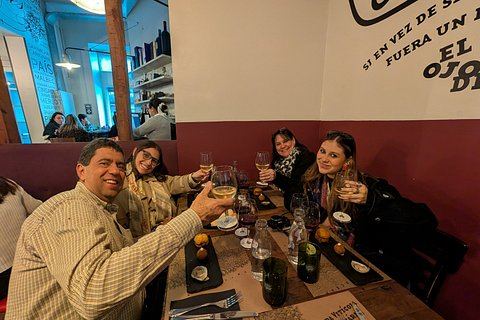 Lastarria Food Tour Wine, Bites & Social Culinary Experience
Free cancellation
(opens in a new tab)
-
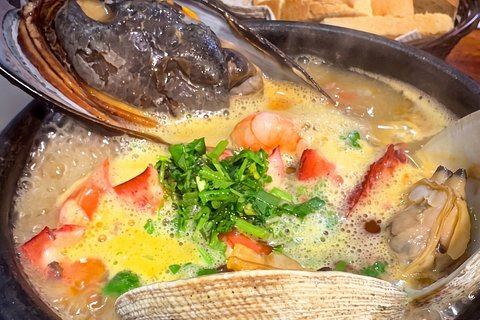 Santiago: Lastarria Food Tour with 5 Tastings and Ice Cream
Free cancellation
(opens in a new tab)
-
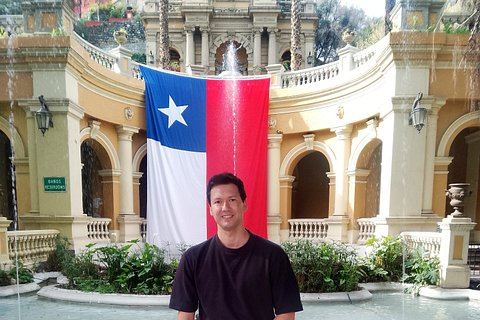 A Fabulous Walking tour by the Old Santiago of Chile -
Free cancellation
(opens in a new tab)
Affiliate link Viator · If you book through this link, we may earn a commission at no extra cost to you.