
Written by  Maria Torres · Updated 2026-11-25
- Category
- Neighborhoods
Barrio Italia spans the edge of Providencia and Ñuñoa, roughly between Avenida Bilbao and Avenida Irarrázaval, with Avenida Italia as its main street. The area was laid out at the end of the 19th century as the Población Juan García Ballesteros and was later home to immigrant artisans, notably Italians; in 1968 the Italian community opened the Iglesia de Nuestra Señora de Pompeya facing Parque Bustamante. Houses from the late 19th and early 20th centuries now hold designers' shops, cafés and restaurants alongside small workshops and mechanics' garages. It is best explored on foot along Avenida Italia and its side streets. Combine it with Ñuñoa's main square a little farther east.
Quick facts
- Metro / train
- Metro de Santiago Line 5 · Parque Bustamante
- Metro / train
- Metro de Santiago Line 5 · Santa Isabel
- Metro / train
- Metro de Santiago Line 3, Line 5 · Irarrázaval
Sources · facts checked on 2026-11-16
Where Barrio Italia is
Barrio Italia, also called Barrio Santa Isabel, covers the southwestern corner of the comuna of Providencia and the northwestern corner of Ñuñoa. Its usual limits are Avenida Bilbao to the north, Avenida Irarrázaval to the south and Avenida General Bustamante with its park to the west; to the east it is variously put at Avenida Salvador or Miguel Claro, though the shops and restaurants mostly stop at Salvador.
Avenida Italia, which crosses both comunas, is the main street and gives the district its name; the name is also linked to the Teatro Italia. Most of the businesses are on Avenida Italia and Avenida Santa Isabel and the side streets between them. On the Ñuñoa side is Plaza Guillermo Francke, and the Italian embassy is also in the neighborhood.
History: from Población Juan García Ballesteros to Barrio Italia
The area was first known as the Población Juan García Ballesteros, laid out in 1896, and later as the Población Italia. Industry and trade developed here in the first decades of the 20th century, and immigrant craftsmen from several countries settled in the houses, Italians most prominent among them, doing business largely among themselves.
In 1968 Italian Scalabrinian missionaries settled opposite Parque Bustamante at the request of the local Italian community, and the Iglesia de Nuestra Señora de Pompeya was inaugurated on March 19 that year, holding Mass in Spanish and Italian. In 2003 it became the seat of the Latin American Parish for migrants. On Sundays there is still a morning Mass in Italian, and the Italian community celebrates its Republic Day there each June.
Two Chilean presidents, Eduardo Frei Montalva (1964–1970) and his son Eduardo Frei Ruiz-Tagle (1994–2000), lived in the neighborhood at Hindenburg 683 for decades.
What you see today
Houses from the late 19th and early 20th centuries, many single-story with continuous facades, now hold the shops of artists, designers and chefs alongside small businesses and even car repair workshops. Galleries, workshops and stores focus on design, decoration, art and clothing. Caupolicán street is known for its furniture and woodwork restorers.
The food scene is notably international, with Italian, Chilean, Peruvian, Chinese, Ecuadorian, Spanish, French, Uruguayan, Venezuelan, Vietnamese, Turkish, Indian and Thai places, plus many cafés. Heritage buildings include the old Marín mattress workshop, the Casa Fresia and the San Crescente parish church. Restaurants and shops set their own hours; check each one directly.
Casa Museo Eduardo Frei Montalva
The two-story house at Hindenburg 683, built by architect Osvaldo Baeza, was home to Eduardo Frei Montalva from 1942 until his death; Queen Elizabeth II visited it in November 1968. It became a Historic Monument on May 13, 2005, and has been a museum since May 12, 2008, displaying the president's belongings, about 3,600 books and works of art, including fragments of Moon rock brought back by Apollo 11. It describes itself as the only house museum of a former Chilean president open to the public.
In November 2026 the museum listed guided tours Tuesday to Sunday from 10:00 to 18:00, closed in February and on mandatory public holidays, with a paid entry fee in Chilean pesos (CLP). Check the official site before you go.
Parque Bustamante
Parque Bustamante forms the western edge of the district. It runs south from Avenida Providencia, just below Plaza Baquedano, on the route of the old Llano de Maipo railway to Puente Alto; the tracks were removed in the early 1940s and the park opened in 1945. Metro Line 5 runs beneath it. Along the way are a two-story literary café designed by Germán Bannen (2008) and a skatepark between Avenida Rancagua and Bilbao. Parque Bustamante station holds Pablo Rivera's sculpture El sitio de las cosas and a 223-meter mural painted in 2008 by Mono González, one of the founders of the Brigada Ramona Parra.
How to get there
Metro Line 5 runs under Parque Bustamante along the western edge of the neighborhood: get off at Parque Bustamante (accesses on Bilbao and Ramón Carnicer), Santa Isabel, or Irarrázaval, which also connects with Line 3. From Plaza de Armas, Line 5 reaches Santa Isabel without changing trains. From there walk east along Avenida Santa Isabel or Avenida Italia.
Tips for your visit
Allow two to three hours to walk Avenida Italia and its side streets, more if you visit the Frei Montalva house (closed Mondays and in February). Combine it with a stroll along Parque Bustamante or continue east to Ñuñoa and its main square. Providencia's Avenida Providencia is a few blocks north.
Key spots in Barrio Italia
Landmarks in and around the neighborhood.
Avenida Italia
Where Main street, Providencia and Ñuñoa
Spine of the district with design shops, cafés and restaurants
Caupolicán street
Where Off Avenida Italia
Furniture and woodwork restorers
Iglesia de Nuestra Señora de Pompeya
Where Facing Parque Bustamante
Bilingual Spanish-Italian church inaugurated March 19, 1968
Casa Museo Eduardo Frei Montalva
Where Hindenburg 683
Home of President Frei Montalva, museum since 2008
Parque Bustamante
Where Western edge
Linear park opened in 1945 on a former railway line
Plaza Guillermo Francke
Where Ñuñoa side
Neighborhood square
Museum hours change; check the official site before you go. Shops and restaurants set their own hours.
Frequently asked questions
How do I get to Barrio Italia by Metro?
Take Line 5 to Parque Bustamante, Santa Isabel or Irarrázaval (also Line 3), all under Parque Bustamante on the western edge, then walk east to Avenida Italia.
Why is it called Barrio Italia?
It is named after Avenida Italia, its main street, and is associated with the Italian immigrant craftsmen who lived there in the 20th century.
Is Barrio Italia worth visiting?
Yes, for design shops, furniture restorers, cafés and a wide range of international restaurants in late 19th- and early 20th-century houses, plus the Frei Montalva house museum.
Which comuna is Barrio Italia in?
It straddles two: the southwestern part of Providencia and the northwestern part of Ñuñoa, roughly between Avenida Bilbao and Avenida Irarrázaval.
How long should I spend in Barrio Italia?
Two to three hours for a walk and a meal; add time for a guided tour of the Casa Museo Eduardo Frei Montalva, which runs Tuesday to Sunday.
Popular tours that include Barrio Italia
-
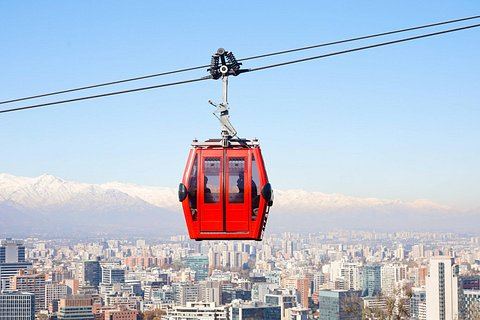 Cable Car, Funicular and Sightseeing Bus in Santiago one day
Free cancellation
(opens in a new tab)
-
 Discover Santiago: Tourist Bus, Cerro San Cristobal and Wine
Free cancellation
(opens in a new tab)
-
 Santiago Private Walking Tour with Hotel Pick-up (5 Hours)
Free cancellationPrivate
(opens in a new tab)
Affiliate link Viator · If you book through this link, we may earn a commission at no extra cost to you.