
Written by  Maria Torres · Updated 2026-11-25
- Category
- Museums
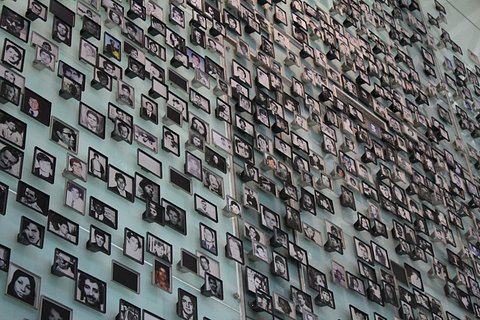
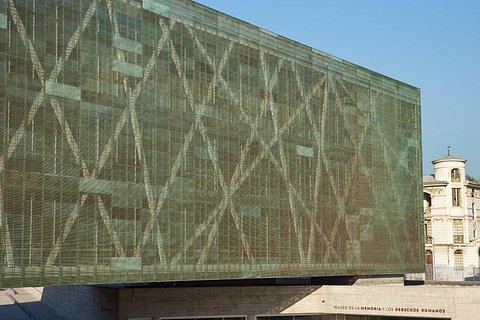
This museum commemorates the victims of human rights violations committed under the military dictatorship of Augusto Pinochet between 1973 and 1990. President Michelle Bachelet, herself a torture survivor, laid its first stone in December 2008 and opened it on January 11, 2010. The building, by the São Paulo firm Estudio America, is a long box clad in green copper panels raised above an open plaza on Avenida Matucana. Inside, documents, testimonies, photographs and objects trace the 1973 coup, repression, exile and the return to democracy, including a wall of portraits of the disappeared and executed. Give it at least two hours; it is across from the Quinta Normal metro station and park.
Quick facts
- Address
- Matucana 501, Barrio Yungay & Brasil
- Metro / train
- Metro de Santiago Line 5 · Quinta Normal
- Opening hours
- Tue–Sun: 10:00–18:00
- Admission
- Free
- Opened
- 2010
- Architect
- Mario Figueroa, Lucas Fehr and Carlos Dias
Sources · facts checked on 2026-11-16
- Historia, Museo de la Memoria y los Derechos Humanos
- Fundamentos, Museo de la Memoria y los Derechos Humanos
- Arquitectura, Museo de la Memoria y los Derechos Humanos
- Muestra principal, Museo de la Memoria y los Derechos Humanos
- Recorre el Museo de la Memoria (virtual tour)
- Visítanos, Museo de la Memoria y los Derechos Humanos
- Museo de la Memoria y los Derechos Humanos (Wikipedia es)
- Museum of Memory and Human Rights (Wikipedia en)
What the museum is
The Museo de la Memoria y los Derechos Humanos commemorates the victims of the human rights violations committed in Chile during the civil-military dictatorship that began with the coup of September 11, 1973, and ended on March 10, 1990. Its main exhibition uses documents, testimonies, photographs and objects to tell the story of that period.
The museum defines itself as a project of moral reparation to the victims and a place to reflect on the past for the sake of future generations. On one wall of the entrance hall visitors read the words President Michelle Bachelet wrote for its opening: "We cannot change our past; all we can do is learn from what we lived through. This is our responsibility and our challenge."
How the museum came about
The museum grew out of the recommendations of the National Commission for Truth and Reconciliation (the Rettig Report), President Ricardo Lagos's support for memorials, and the demands of victims' families and human rights organizations, whose archives had been inscribed in UNESCO's Memory of the World register. Several of those organizations, FASIC, CODEPU, PIDEE and Teleanálisis, had formed the Casa de la Memoria corporation, which donated its archives and collections in a ceremony at La Moneda on June 16, 2009.
President Bachelet announced the museum in her annual address to Congress on May 21, 2007, and the Ministry of Public Works opened a national and international architecture competition on June 11, 2007. Bachelet, herself a victim of torture under the dictatorship, laid the first stone on December 10, 2008. She inaugurated it as a Bicentennial project on January 11, 2010, before about 3,000 people, among them victims of the dictatorship and their families.
The building and the Plaza de la Memoria
The competition was won by a team of São Paulo architects, Mario Figueroa, Lucas Fehr and Carlos Dias, with a design based on the idea of an open city block. The exhibition spaces sit in a long raised volume that appears suspended above a plaza and two pools of water, lit from above and through side panels of glass and copper metal mesh. It stands on the corner of Avenida Matucana and Catedral street in Barrio Yungay, on land where an intermodal transport station had been started and abandoned in 2006; construction ran from December 2008 to December 2009.
In front of the building, the Plaza de la Memoria, about 6,000 square meters, is reached by a ramp from Catedral street and is used for concerts and events. A wall bordering it carries the 30 articles of the Universal Declaration of Human Rights in copper. Beneath the plaza is Alfredo Jaar's installation La geometría de la conciencia, in which 500 backlit silhouettes, some of Chileans who were detained and disappeared and some of living people, evoke the scale of the loss. On a side wall near the connection to Quinta Normal Metro station is Jorge Tacla's mural Al mismo tiempo, en el mismo lugar, which honors the singer-songwriter Víctor Jara.
The main exhibition, floor by floor
In the entrance hall, a world map places Chile's experience alongside other countries that created truth commissions; nearby are photographs of more than 190 memorials built by private initiative and the reports of Chile's truth commissions: the National Commission for Truth and Reconciliation (1991), the National Corporation for Reparation and Reconciliation (1996) and the National Commission on Political Imprisonment and Torture (2004).
The first floor opens with September 11, 1973: the armed forces' demand for President Salvador Allende's resignation at 8:30, the tank fire on La Moneda from 10:00, the air force bombing at midday and the death of Allende inside the palace. For September 1973 alone, the truth commissions recorded 598 dead, 274 detained and disappeared and 19,083 political prisoners and torture victims (figures updated to 2011). Later rooms cover the end of the rule of law (the Junta formed on September 18, 1973, the state of siege and curfew, the closing of Congress, the banning of political parties and the destruction of electoral registers), exile and international condemnation, and repression and torture. A room on the pain of children records that the commissions identified 153 minors executed or killed in protests, 40 detained and disappeared and 2,200 imprisoned and tortured.
On the second floor, the demand for truth and justice shows how families organized; between 1973 and 1989 the Comité Pro Paz and the Vicaría de la Solidaridad filed about 9,000 habeas corpus petitions on behalf of more than 23,000 people, most of them rejected. The Ausencia y memoria space, intended for silence and reflection, holds a wall of photographs of the faces of those who were killed or disappeared, with a touchscreen where visitors can look up names and what happened to each person as recorded in the commissions' reports. The visit continues through the protests that began in May 1983, cultural resistance to censorship, the plebiscite of October 5, 1988, won by the NO with 54.71 percent, and Patricio Aylwin taking office on March 11, 1990. A final space includes Justicia, an interactive platform with about 150 court rulings on human rights crimes committed between 1973 and 1990, and Más que Nunca, an installation of testimonies from Indigenous peoples.
Visiting: hours, admission and guided visits
When this page was checked (November 2026), the museum's official site gave opening hours of Tuesday to Sunday 10:00 to 18:00, with last entry at 17:30. Admission is free for the general public and on a first-come basis; capacity is 350 people at a time. It is closed on January 1, May 1, September 18 and 19 and December 25. Check the official site before you go.
Groups wanting a mediated or unguided visit must book in advance by email at [email protected] or by WhatsApp on +56 9 4291 8742. There is a café, a shop and parking. The rooms deal directly with torture, disappearance and the deaths of children, so parents may want to look at the museum's online virtual tour first to decide what suits younger visitors. Allow at least two hours, and keep voices low in the Ausencia y memoria space.
Getting there
The museum is at Matucana 501 and has a direct connection to Quinta Normal station on Metro de Santiago Line 5. RED bus routes 507, B26 and B28 run along Matucana; J09, J10 and J19 along Catedral; and 505, 508 and 510 along Compañía. Bike parking is at the Quinta Normal Park entrance opposite the museum, and the car park entrance is on Catedral, between Chacabuco and Matucana.
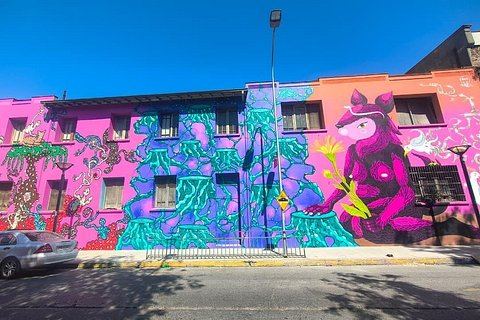
Quinta Normal Park (Parque Quinta Normal) is directly across Matucana, with the National Museum of Natural History (Museo Nacional de Historia Natural) inside it. The museum is part of Barrio Yungay, laid out from 1839, whose streets are worth walking afterward.
Spaces of the main exhibition
The order of the visit as the museum describes it.
Human Rights, a Universal Challenge
Where Entrance hall
World map of truth commissions, Chile's commission reports, photographs of more than 190 memorials
September 11, 1973
Where First floor
The coup hour by hour and the first month's victims
The pain of children
Where First floor
Children executed, disappeared, imprisoned or exiled
Demand for truth and justice
Where Second floor, north corridor
Comité Pro Paz, Vicaría de la Solidaridad and families' organizations
Ausencia y memoria
Where Second floor
Photo wall of victims' faces and a name search screen
Justicia interactive
Where Second floor, south corridor
About 150 court rulings on crimes committed from 1973 to 1990
La geometría de la conciencia
Where Beneath the Plaza de la Memoria
Alfredo Jaar's installation of 500 backlit silhouettes
The exhibition is free; temporary exhibitions occupy the third level.
Frequently asked questions
Is the Museum of Memory and Human Rights free?
Yes. In November 2026 the official site said admission is free for the general public, on a first-come basis.
What are the opening hours of the Museo de la Memoria?
Tuesday to Sunday from 10:00 to 18:00, with last entry at 17:30, as listed on the official site in November 2026. It is closed on January 1, May 1, September 18 and 19 and December 25.
How do I get to the Museum of Memory in Santiago?
Take Metro Line 5 to Quinta Normal station, which connects directly with the museum at Matucana 501.
How long does a visit to the Museum of Memory take?
Allow at least two hours for the two floors of the main exhibition.
Is the Museum of Memory suitable for children?
It covers torture, disappearance and the deaths of children in direct terms, including a room on children who were victims, so parents should judge what suits younger visitors.
Can I book a guided visit?
Groups can book mediated visits in advance by emailing [email protected] or by WhatsApp on +56 9 4291 8742.
Popular tours that include Museum of Memory and Human Rights (Museo de la Memoria y los Derechos Humanos)
-
 Museum of Memory and Human Rights with a Political Analyst
Free cancellation
(opens in a new tab)
-
 Museum of Memory and Human Rights Santiago Private Tour
Free cancellationPrivate
(opens in a new tab)
-
 Santiago Barrio Yungay Street Art Walking Tour Experience
Free cancellation
(opens in a new tab)
Affiliate link Viator · If you book through this link, we may earn a commission at no extra cost to you.