
Written by  Maria Torres · Updated 2026-11-25
- Category
- Historic Center
- Area
- Santiago Centro
Built between 1769 and 1779 for Mateo de Toro Zambrano, Casa Colorada is one of the best-preserved colonial townhouses in Chile and was the first residence in Santiago with a two-story facade. The red-plastered walls, stone ground floor and iron balconies sit on Calle Merced, a block from the Plaza de Armas. It was declared a historic monument in 1977, and since 1981 it has housed the Museo de Santiago, which traces the city's story from the first settlements in the Mapocho valley to the 21st century. The 2010 earthquake closed it for years; after a restoration it reopened to visitors in September 2024. Plan about an hour for the house and its patios.
Quick facts
- Address
- Merced 860, Santiago Centro
- Metro / train
- Metro de Santiago 5 · Plaza de Armas
- Metro / train
- Metro de Santiago 3 · Plaza de Armas
- Admission
- Paid (ticketed)
- Completed
- 1779
What Casa Colorada is
Casa Colorada (the Red House) is an 18th-century townhouse at Merced 860, a block from the Plaza de Armas, and one of the few colonial houses left in central Santiago. It was built between 1769 and 1779 for Mateo de Toro Zambrano and was the first residence in the city with a two-story street facade, a bold choice in a country shaken by frequent earthquakes.
Since 1981 the house has held the Museo de Santiago, the city museum. Its permanent exhibition runs through eight rooms and follows Santiago from the first settlements in the Mapocho valley to the early 21st century, using scale models, historical maps, 3D prints, paintings, dioramas and pre-Hispanic objects.
The building
The house is credited to the Portuguese builder Joseph de la Vega. The facade is plastered in the deep red that gives the house its name, with a stone-clad ground floor, round-arched openings and stone balconies with wrought-iron railings on the upper floor. Behind the street front, rooms are arranged around interior patios in the colonial manner, and visitors cross these patios to reach the exhibition.
The structure itself shows colonial building techniques: walls of sillar (volcanic stone), an oak roof frame and mezzanine floors of canelo wood laid over frames of coligüe, a native cane. It was exactly these oak beams and the mortar of the stone walls that suffered most in the 2010 earthquake.
From family home to shopping arcade
The Irarrázaval family lived in the house until 1924. In 1942 it was bought by Etelvino Villanueva, and from 1945 it was let out as the Galería Colonial, an arcade of 37 shops and restaurants. On May 8, 1963 a short circuit in a wooden attic above a print shop set off a gas cylinder explosion that injured 13 people.
The house came close to disappearing more than once. In 1953 the municipality proposed demolishing it for a 12-story rental building, and in 1954 there was a plan to move it to Cerro Santa Lucía. A 1960 law named it a national monument but also ordered it moved to Plaza Santa Ana, and a 1969 decree approved plans for the move to allow street widening. Architects and academics objected, including the Colegio de Arquitectos de Chile in December 1969, and the house stayed where it was.
Monument, museum and the long closure
On August 11, 1977 a decree-law declared Casa Colorada a historic monument and authorized the Municipality of Santiago to buy it. A first restoration was completed on September 18, 1978, and the Museo de Santiago was officially opened on February 10, 1981.
The February 2010 earthquake damaged the structure and the museum closed. Rehabilitation and a full renewal of the exhibition began in 2020, with more than CLP 1.8 billion from the Santiago regional government for structural reinforcement, repairs and new installations. The house was reinaugurated on August 31, 2024 and received its first visitors on September 3, 2024, after 14 years shut. The work restored eleven dioramas by the artist Zerreitug (Luis Rodolfo Gutiérrez), whose models are also found in the Santiago Metro, added two new ones, and introduced audio guides, including versions for blind and visually impaired visitors. More than 75,000 people visited in the first year after reopening.
Hours and admission
In November 2026 the municipal culture site listed opening hours of Tuesday to Friday 10:00 to 18:00 and Saturday 10:00 to 16:00, closed Sunday and Monday. Listed admission was CLP 2,000 for adults, CLP 4,000 for foreign tourists and CLP 1,000 for foreign students; seniors, under-18s and Chilean students entered free. Hours and prices change, so check the official page before you go. Groups and school classes arrange mediated visits by email in advance.
Getting there and combining it
Plaza de Armas station, where Metro Lines 3 and 5 meet, is the nearest stop, about a block from the house. Plan about an hour for the house and its patios.
The house fits naturally into a walk around the Plaza de Armas: the Metropolitan Cathedral (Catedral Metropolitana) and the Central Post Office (Correo Central) stand on the square, the Chilean Museum of Pre-Columbian Art (Museo Chileno de Arte Precolombino) is a short walk west, and the Central Market (Mercado Central) lies a few blocks north toward the Mapocho river. The Museo de Santiago is a good first stop, since its models and maps make the rest of the old center easier to read.
Frequently asked questions
Is Casa Colorada open again after the earthquake?
Yes. It closed after the 2010 earthquake and reopened as the Museo de Santiago in September 2024 after a restoration.
What are the Casa Colorada opening hours?
In November 2026 the official listing gave Tuesday to Friday 10:00 to 18:00 and Saturday 10:00 to 16:00, closed Sunday and Monday. Check before you go.
How much does it cost to enter the Museo de Santiago?
In November 2026 adults paid CLP 2,000 and foreign tourists CLP 4,000; seniors, under-18s and Chilean students entered free. Check the official page for current prices.
Where is Casa Colorada and how do I get there?
It is at Merced 860, a block from the Plaza de Armas. The nearest Metro station is Plaza de Armas on Lines 3 and 5.
How long do you need at Casa Colorada?
About an hour covers the eight exhibition rooms and the patios.
Why is it called Casa Colorada?
Colorada means red: the house is named for its deep red plastered facade.
Popular tours that include Casa Colorada
-
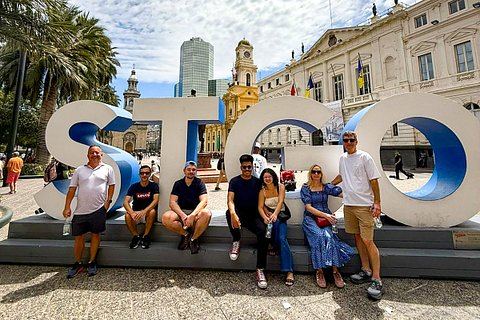 La Moneda Palace, Plaza de Armas & Historic Santiago Walking Tour
Free cancellation
(opens in a new tab)
-
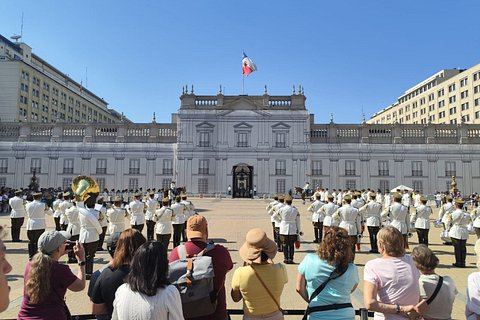 La Moneda Changing of Guard & Historic Santiago Walking Tour
Free cancellation
(opens in a new tab)
-
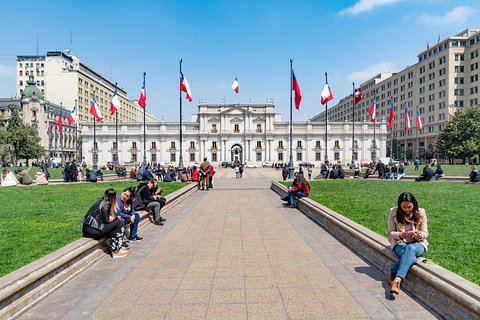 Santiago Changing of Guard and Historic Downtown Private Tour
Free cancellationPrivate
(opens in a new tab)
Affiliate link Viator · If you book through this link, we may earn a commission at no extra cost to you.