
Written by  Maria Torres · Updated 2026-11-25
- Category
- Historic Center
- Area
- Santiago Centro
Santiago's Central Market opened on August 23, 1872, replacing a food market lost to fire in 1864. Its centerpiece is a cast-iron roof fabricated in Glasgow by Laidlaw & Sons, with a pyramidal central roof and domed lantern ringed by smaller two-tier roofs; Fermín Vivaceta directed the construction. The building was declared a historic monument in 1984. Today its roughly 240 stalls mix fishmongers, butchers and cheese sellers with restaurants serving classic seafood dishes such as paila marina and mariscal. Come earlier in the day to see the fish counters at work, and pair it with La Vega Central across the Mapocho River.
Quick facts
- Address
- Block of Ismael Valdés Vergara, 21 de Mayo, San Pablo and Puente, Santiago Centro
- Metro / train
- Metro de Santiago 2 · Puente Cal y Canto (~4 min walk)
- Metro / train
- Metro de Santiago 3 · Puente Cal y Canto (~4 min walk)
- Opened
- 1872
Sources · facts checked on 2026-11-16
What the market is
The Mercado Central is Santiago's best-known food market, devoted above all to fish and seafood. It fills the block between Ismael Valdés Vergara, 21 de Mayo, San Pablo and Puente streets, a few blocks north of the Plaza de Armas and just south of the Mapocho River. The two-story building holds 241 premises: fishmongers, butchers, cheese shops, bakeries, herb stalls (hierberías), grocers, liquor stores, craft shops and restaurants, and about 800 people work here.
History
The market replaced the old Plaza de Abastos, the food market destroyed by fire in 1864. Work began in 1869 and finished on August 23, 1872; the building was inaugurated during the National Exhibition of Arts and Industries organized by the intendant of Santiago, Benjamín Vicuña Mackenna, under President Federico Errázuriz Zañartu.
It has changed several times since. A second brick ring was added around the perimeter in 1884, electric lighting arrived in 1900, and between 1927 and 1930 the north front was demolished to widen Ismael Valdés Vergara street. In 1983 the Municipality of Santiago restored the building and added the administration volumes on San Pablo street, and on June 15, 1984, it was declared a historic monument.
The iron roof
Look up as you walk in. The building's main feature is its cast-iron roof and supporting structure, fabricated in Glasgow by the Scottish engineering firm Laidlaw & Sons and designed with the participation of Edward Woods and Charles Henry Driver. Set on a square plan, it has a central pyramidal roof crowned by a domed lantern, surrounded by eight smaller roofs in two tiers.
The iron hall covers an inner square enclosed by a ring of fired-brick masonry designed by Manuel Aldunate y Avaria. The architect Fermín Vivaceta, who also designed the clock tower of the Church of San Francisco (Iglesia de San Francisco), was in charge of the construction, carried out by the contractor Juan Estephani.
What to eat
The market's restaurants keep traditional Chilean seafood recipes. Look for paila marina, a seafood stew served in a clay bowl; mariscal, mixed shellfish usually served cold; and pescado frito, fried fish. The fish counters sell the day's catch to home cooks and restaurants alike.
The market starred in Chilean television: the TVN telenovela Amores de mercado (2001) was set and largely filmed here, and Mega produced a remake, Nuevo amores de mercado, in 2024.
The market today
In June 2012 National Geographic ranked it the fifth best market in the world. It is still a working food market as well as a dining stop: its fishmongers, butchers, cheese shops and grocers sell to the public, and it is a listed historic monument as well as part of the official heritage route through the center.
Because the market sits on the edge of the historic center by the river, it works as a hinge between two walks. To the east, Forestal Park (Parque Forestal) runs along the south bank of the Mapocho toward the museums of the Palacio de Bellas Artes; to the north, the bridges cross to the produce markets of La Vega and the Tirso de Molina Market.
Getting there and combining it
Puente Cal y Canto station, on Metro Lines 2 and 3, is close by on the bank of the Mapocho. From the Plaza de Armas, walk north along Puente or 21 de Mayo street.
Come in the morning or around lunchtime to see the fish counters at work. Across the Mapocho, La Vega Central sells fruit and vegetables, and the Tirso de Molina Market (Mercado de Abasto Tirso de Molina) beside it has more cocinerías (simple eateries). La Piojera, the traditional bar known for the terremoto, is almost opposite the market on Aillavilú street.
Dishes to look for
Classic preparations served in the market's restaurants.
Paila marina
Where Market restaurants
Hot stew of fish and shellfish served in a clay bowl (paila)
Mariscal
Where Seafood restaurants
Mixed shellfish, usually served cold
Pescado frito
Where Seafood restaurants
Fried fish
Restaurant hours and prices vary; check with each place.
Frequently asked questions
Is the Mercado Central in Santiago worth visiting?
Yes, for the 1872 iron hall made in Glasgow and for its fish counters and seafood restaurants serving traditional dishes such as paila marina.
How do I get to the Mercado Central by Metro?
Take Line 2 or Line 3 to Puente Cal y Canto, close by on the bank of the Mapocho. From the Plaza de Armas it is a short walk north along Puente or 21 de Mayo street.
What should I eat at the Mercado Central?
Classic dishes are paila marina (seafood stew), mariscal (cold mixed shellfish) and pescado frito (fried fish).
When was the Mercado Central built?
Work began in 1869 and the market opened on August 23, 1872, replacing a food market lost to fire in 1864. It was declared a historic monument in 1984.
What is near the Mercado Central?
La Vega Central and the Tirso de Molina Market are across the Mapocho River, La Piojera bar is almost opposite on Aillavilú street, and the Plaza de Armas is a few blocks south.
Popular tours that include Central Market (Mercado Central)
-
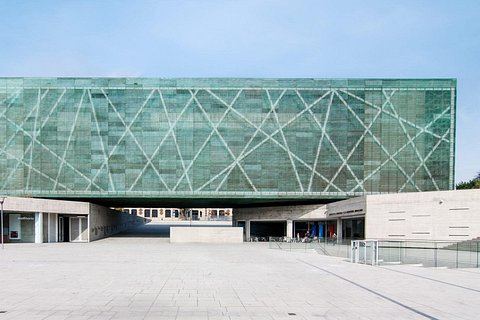 Private Santiago Museum Tour with Lunch at Central Market
Free cancellationPrivate
(opens in a new tab)
-
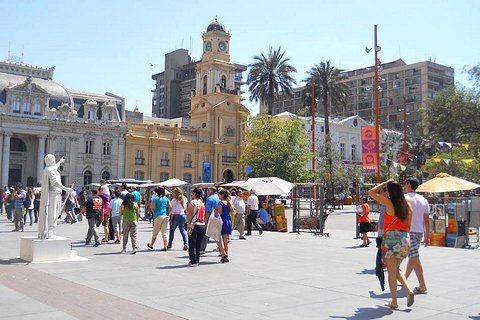 Private Tour: Half-Day Santiago Discovery
Private
(opens in a new tab)
-
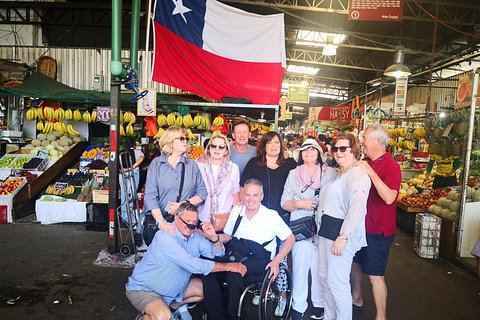 Private Day Tour in Santiago
Free cancellationPrivate
(opens in a new tab)
Affiliate link Viator · If you book through this link, we may earn a commission at no extra cost to you.